OssDsign Catalyst®

Real world data. Real world results.™

933143
Bone healing is not a single event
Successful outcomes depend on early, rapid bone formation as well as continued maturation and remodeling to form stable, integrated bone.

That understanding is reflected in the design of OssDsign Catalyst®, engineered to support healing across the full bone healing cascade from formation through remodeling.1,2
1029x685px_grey_blurbackground_textleft

OssDsign Catalyst

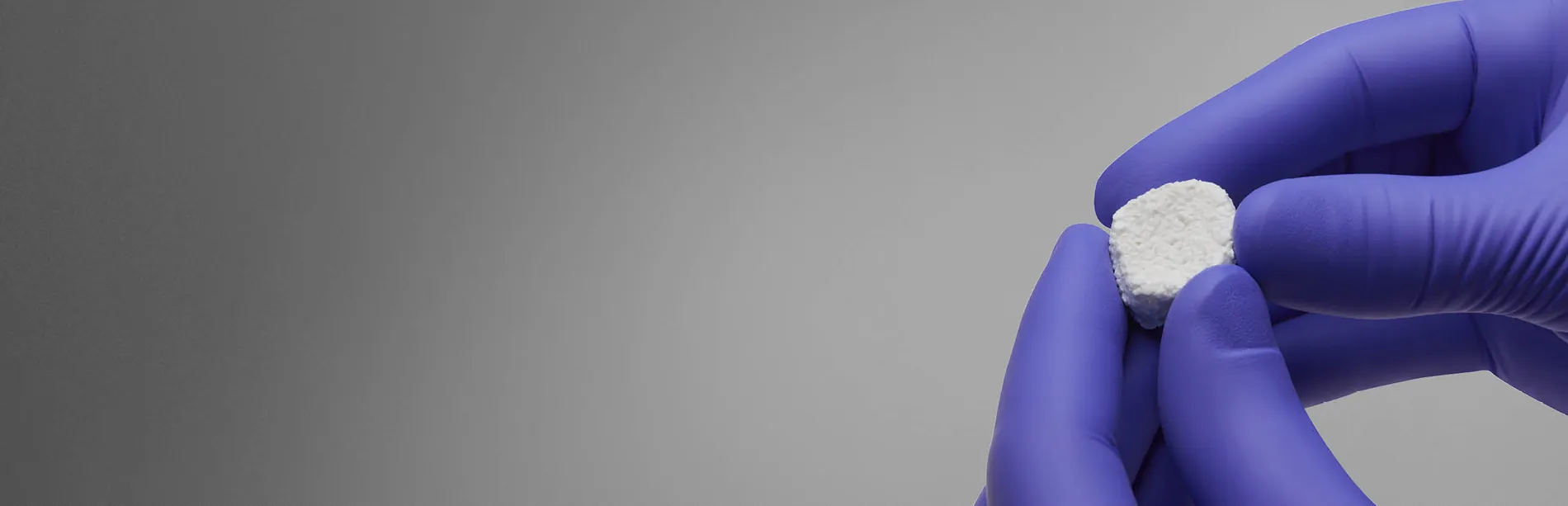
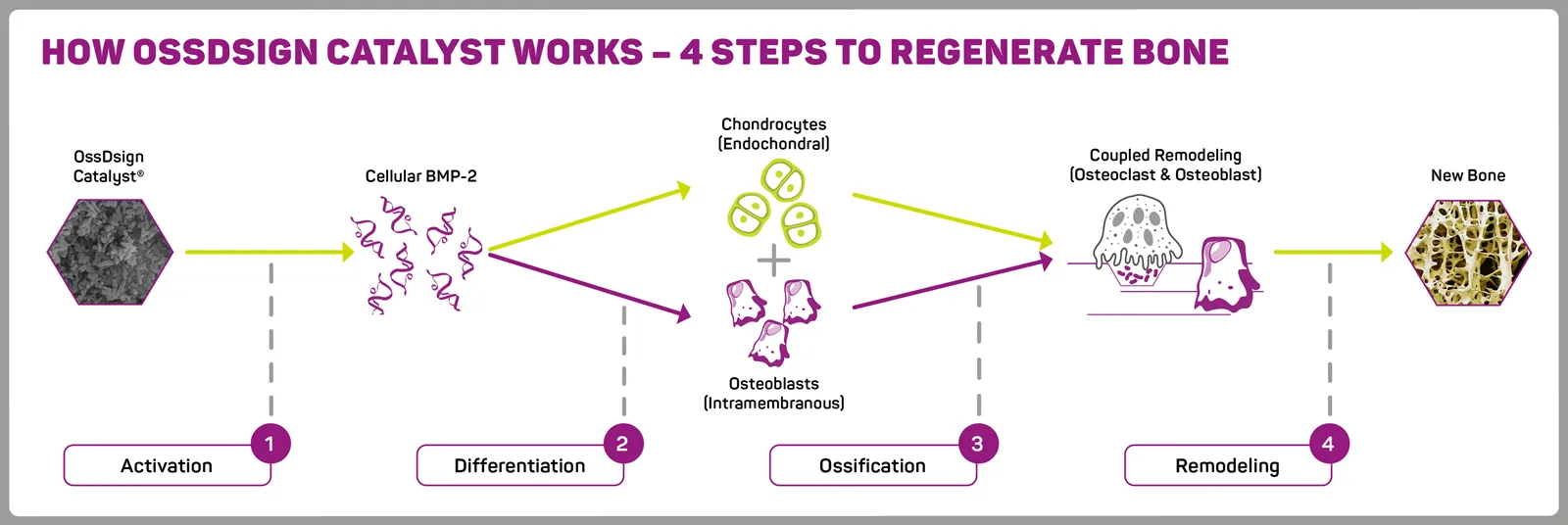
A nanosynthetic, silicate-substituted bone graft designed to upregulate cellular BMP-2, drive dual-pathway healing, including endochondral ossification, and cell-mediated coupled remodeling, enabling rapid, robust fusion in challenging environments.1,2*

View the evidence
Catalyst MOA Graphic_website_4
1029x685px_beige_blurbackground_textright

Bone formation starts with cellular signaling


Cellular BMP-2 upregulation

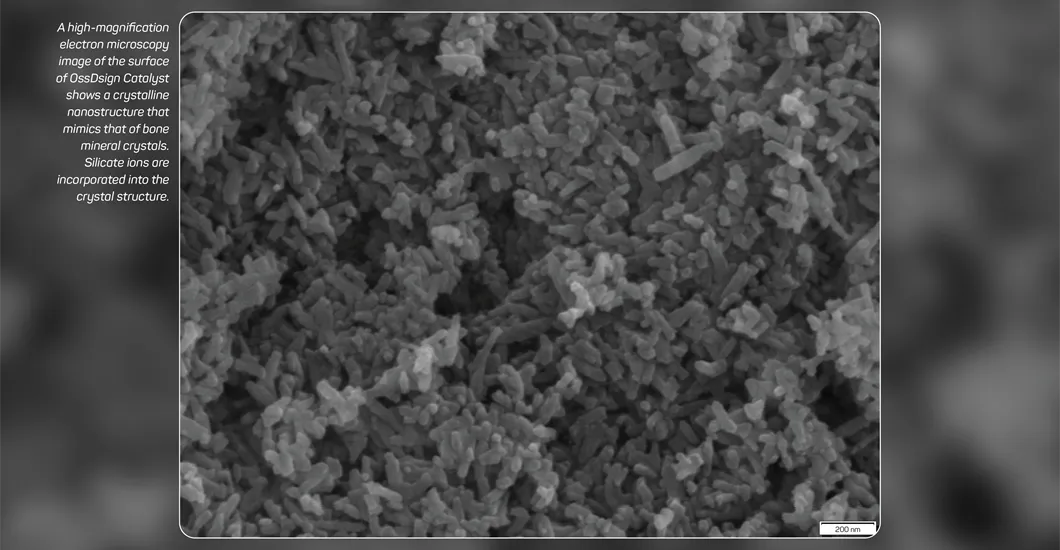
Silicate ions are substituted directly into Catalyst’s core chemistry, rather than coated on the surface or delivered via a carrier, enabling sustained silicate signaling from early healing through remodeling. Its high surface area mirrors native bone at the nanoscale, extending throughout the graft.1,2† Together, these features are designed to stimulate cellular BMP-2 activity, driving rapid bone formation.*†

1029x685px_blue_blurbackground_textleft

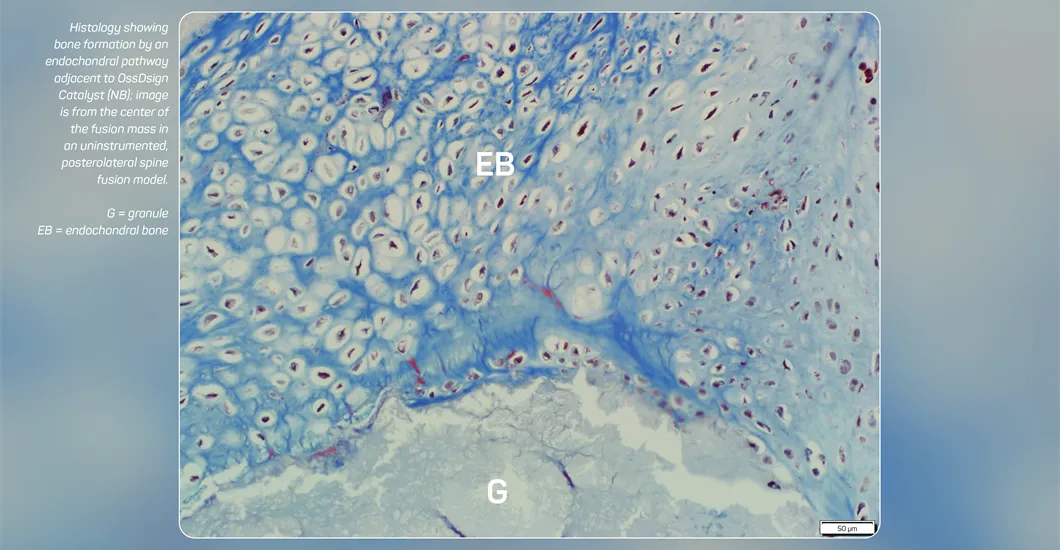
Cellular signaling drives how bone forms


Dual-pathway healing

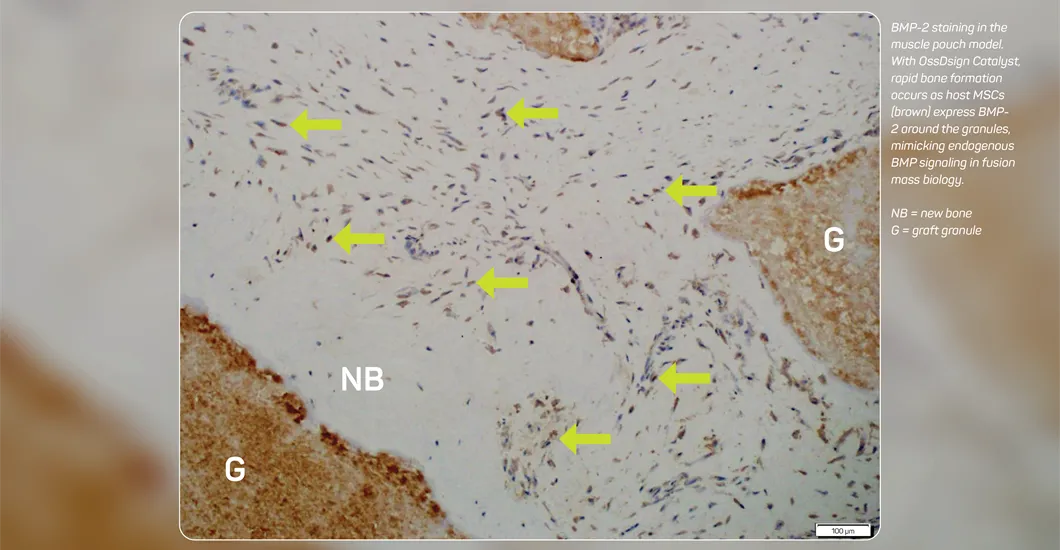
Similar to rhBMP-2 and autograft, Catalyst activates endochondral ossification, the body’s primary fracture repair mechanism. Most synthetics rely solely on intramembranous bone formation. This facilitates fusion even in challenging avascular environments, such as the center of the fusion mass or large defects.2† By leveraging both pathways, Catalyst is designed to support bone formation in complex clinical scenarios.1,2†

1029x685px_pink_blurbackground_textright

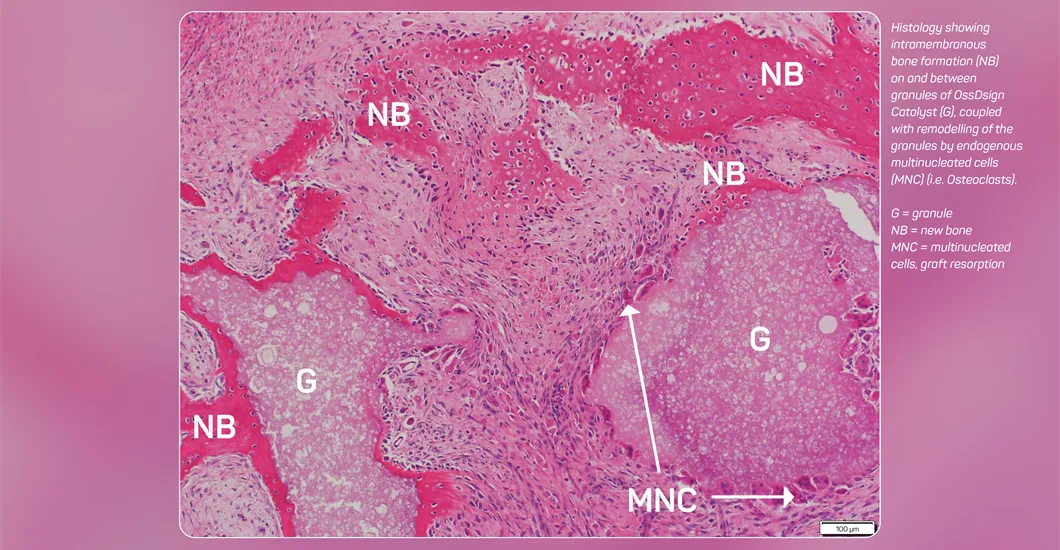
Bone formation starts the process – remodeling completes it


Cell-mediated coupled remodeling

 In clinically relevant, challenging preclinical models, Catalyst has demonstrated coupled remodeling as early as 6 weeks. Catalyst is replaced by new bone, reflecting cell-mediated active healing. The result is functional, robust bone that integrates with native bone.1,2†

First class handling

– Available for immediate use

– Easy intra-operative manipulation

– Mixes well 1:1 with local autograft

– Packs well into an interbody cage

– Pushes easily down a canula

– Cleared for standalone use in the extremities

Article number
Description
Size
104010OssDsign Catalyst Nanosynthetic Bone Graft Putty
1 cc
104025OssDsign Catalyst Nanosynthetic Bone Graft Putty
2.5 cc
104050OssDsign Catalyst Nanosynthetic Bone Graft Putty
5 cc
104100OssDsign Catalyst Nanosynthetic Bone Graft Putty
10 cc


1. Gibson, I. R., Lopes, V. R., Oliver, R., Wang, T., Wills, D., Buckland, T., & Walsh, W. R. (2025b). Early new bone formation in ovine intramuscular defects: comparison between different silicate-containing calcium phosphate synthetic bone grafts. Journal of Orthopaedic Surgery and Research, 20(1), 369. https://doi.org/10.1186/s13018-025-05740-0

2. Conway, J. C., Oliver, R. A., Wang, T., Wills, D. J., Herbert, J., Buckland, T., Walsh, W. R., & Gibson, I. R. (2021c). The efficacy of a nanosynthetic bone graft substitute as a bone graft extender in rabbit posterolateral fusion. The Spine Journal, 21(11), 1925–1937. https://doi.org/10.1016/j.spinee.2021.05.017

† Results from pre-clinical testing may not be predictive of clinical experience in humans

* Data on file

This website uses cookiesfor statistics and user experience.

This website uses cookies to improve your user experience, to provide a basis for improvement and further development of the website and to be able to direct more relevant offers to you.

Feel free to read ours privacy policy. If you agree to our use, choose Accept all. If you want to change your choice afterwards, you will find that option at the bottom of the page.

Cookies